
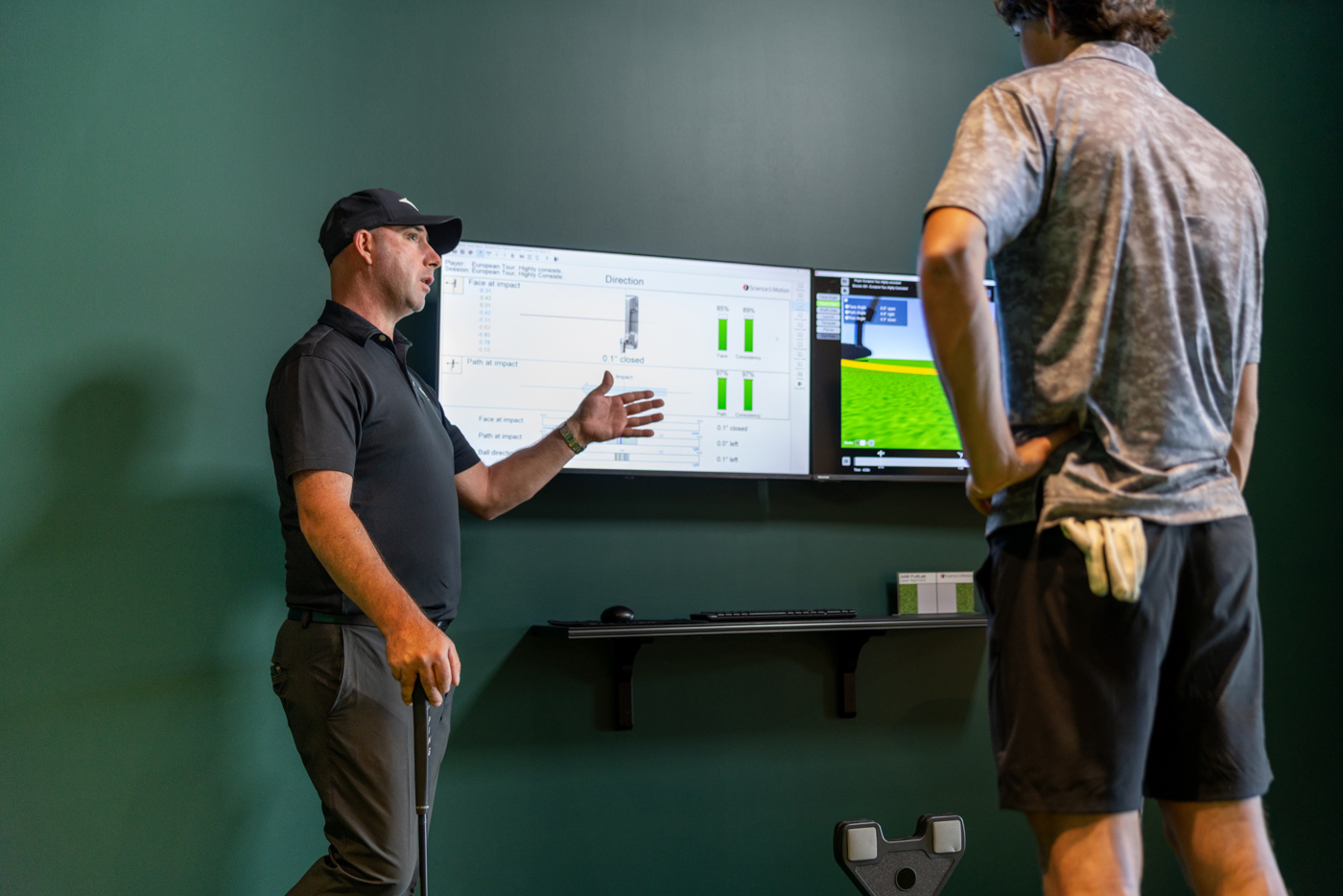


A Note from Charles Kares, Head PGA Professional at GolfSpace
2× NSW/ACT PGA Teaching Professional of the Year.
I’ve been coaching golfers for decades. Beginners. Club golfers. Elite amateurs. Professionals. And there’s one misunderstanding I see more than any other:
Most golfers dramatically underestimate how hard this game is, and overestimate what one lesson can do.
Golf is one of the most technically demanding, mentally complex, and time-intensive sports on the planet. That’s not an opinion; the numbers prove it.
How Hard Golf Really Is (By the Numbers):
Globally, when we look at typical 18-hole scores:
• Around 50% of golfers regularly score over 100
• About 30% manage to break 100
• Roughly 17% break 90
• Only ~2.5% ever break 80
• Fewer than 0.5% play to scratch
• And just 0.05% play professional golf
Let that sink in.
This isn’t because golfers lack talent.
It’s because golf rewards structure, repetition, patience, and long-term commitment, not quick fixes. That’s why one-off lessons rarely create lasting change.


Why One‑Off Golf Lessons Rarely Create Lasting Change
If you’ve ever walked away from a lesson thinking, “Why didn’t that just fix it?”, this is for you.
A single lesson can help you understand something.
But improvement only comes when understanding is followed by guided practice over time.
Golf Improvement Needs a System, Not a Tip
Most golfers hit a wall because they rely on:
• Random, unstructured practice with no clear purpose.
• YouTube tips and quick fixes that contradict each other.
• Inconsistent range habits that don’t transfer to the course.
• Occasional lessons with no long‑term coaching plan.
Real, sustainable improvement comes from combining coaching, structure, accountability, and time, especially if you want to break 100, break 90, break 80 or reach scratch golf.
What It Actually Takes to Break 100 in Golf
Common Problems for Golfers Shooting 110+
At this level, golfers aren’t broken; they’re unstructured. What’s really happening:
• Poor or inconsistent contact.
• Too many penalty shots.
• No short‑game system.
• Random practice with no purpose.
• No decision‑making framework on the course.
Break 100: Practice, Coaching and Timeframe
Required commitment to consistently break 100 in golf:
• 2-4 hours of practice per week
• 1-2 range sessions focused on contact and ball flight
• 1 short-game or putting session
• 1 lesson every 2-3 weeks
Typical timeframe:
• 3-6 months with structure
• 1-2+ years without it (which is why many stay stuck)
This is the fastest improvement zone in golf, if structure exists.
How to Break 90: It’s Not About Swing, It’s About Strategy
Why Most Golfers Plateau in the 90s
The jump from high‑90s to consistent 80s is where golf starts separating casual players from committed ones. What’s really happening:
• Contact is acceptable, but unreliable.
• Big misses still cost shots.
• Poor wedge proximity to the hole.
• No clear scoring strategy.
• Practice doesn’t translate to performance on the course.
This is the most common plateau in golf, and the most frustrating.
Break 90: Smarter Practice and On‑Course Decisions
Required commitment to break 90 in golf:
• 4-6 hours per week
• Targeted range sessions
• 1–2 short-game sessions
• Regular on-course practice
• 2 lessons per month
Typical timeframe
• 6-18 months
Breaking 90 isn’t about hitting it better; it’s about practising better and making fewer mental mistakes.
What It Takes to Break 80: Turning Golf into a Craft
(From mid-80s to consistent 70s)
Now the game becomes demanding.
What’s really happening:
• Technique is functional
• Mistakes are smaller, but costly
• Short game becomes the separator
• Mental errors dominate scoring
Required commitment to break 80 consistently:
• 6-10 hours per week
• Purposeful, uncomfortable practice
• Pressure training
• Structured on-course sessions
• Weekly or fortnightly coaching
Typical timeframe
• 1-3 years for most adults
At this level, golf stops being a hobby. It becomes a craft.
Playing Scratch Golf: Why It’s Rare (But Possible)
(0 handicap / par golf)
This level is rare, not because of talent, but because of lifestyle demands.
What’s really happening:
• Marginal gains matter
• Consistency under pressure is everything
• Physical and mental conditioning are critical
Scratch Golf: Obsession, Structure and Time
Required commitment
• 10–15+ hours per week
• Daily purposeful practice
• Multi-discipline coaching
• Years of consistency
Typical timeframe
• 2-5 years after breaking 80
• Many never reach it, and that’s okay
Scratch golf isn’t about being gifted. It’s about obsession, structure, and time.

The Big Truth: Talent Is Overrated, Structure Is Not
Most golfers overestimate talent and wildly underestimate structure.
With random practice:
• Break 100 → years
•Break 90 → maybe never
• Break 80 → unlikely
• Scratch → irrelevant
With coaching and structure:
• Break 100 → months
• Break 90 → achievable
• Break 80 → possible
• Scratch → rare, but real
This is exactly why structured golf coaching programs like the GolfSpace Academy in Sydney exist, not to promise miracles, but to give golfers what actually works: coaching, structure, accountability, and time.
If you commit to the process, improvement isn’t hopeful.
It’s inevitable.
Charles Kares
Head PGA Professional, GolfSpace
- What Is Virtual Golf and How Does It Work?
 At GolfSpace, virtual golf means playing real golf indoors on TrackMan simulators that capture detailed club and ball data while projecting lifelike courses and practice modes onto a floor‑to‑ceiling impact screen.
 - Why Indoor Golf Is the Fastest-Growing Form of the Game, And Why It Belongs in Golf’s Future
 From suburban professionals squeezing in nine holes after work to city dwellers who don’t live near a course, indoor golf is quietly becoming the format that keeps people actually playing, not just wishing they had more time.
 - Why One Golf Lesson Doesn’t “Fix” Your Swing (And What Actually Works)
 Golf is one of the most technically demanding, mentally complex, and time-intensive sports on the planet. That’s not an opinion; the numbers prove it.
 - Why the Golf Trip is the Peak of the Game
 The Dream Team Series is GolfSpace’s flagship team-based indoor golf competition. A season-long tournament designed to replicate the drama, strategy, and pressure of real competitive golf, inside a TrackMan-powered arena.
 - The Night that Defined what Dream Team is all About
 The Dream Team Series is GolfSpace’s flagship team-based indoor golf competition. A season-long tournament designed to replicate the drama, strategy, and pressure of real competitive golf, inside a TrackMan-powered arena.