
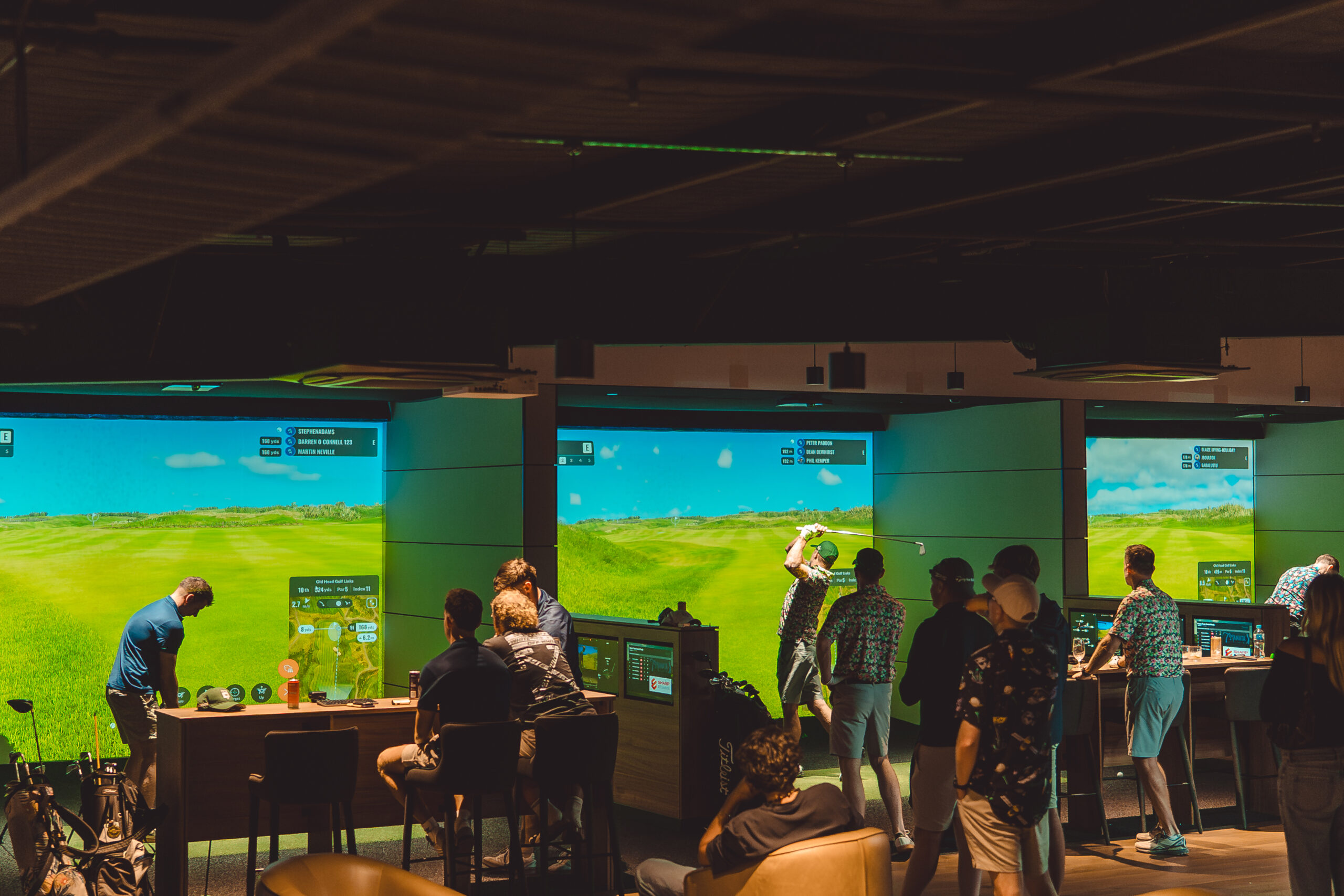


For decades, golf has been defined by tradition.
Eighteen holes.
Early mornings.
Perfect weather windows.
Four to five hours carved out of a busy week.
That version of golf isn’t wrong, but it’s no longer enough.
The modern golfer lives differently.
And golf, like every other sport before it, is evolving to meet that reality.
Indoor golf isn’t a novelty.
It isn’t a replacement.
It’s the fastest-growing extension of the game, and it belongs firmly in golf’s future.
From suburban professionals squeezing in nine holes after work to city dwellers who don’t live near a course, indoor golf is quietly becoming the format that keeps people actually playing, not just wishing they had more time.
Golf Has a Time Problem (Not a Talent Problem)
The biggest barrier to golf today isn’t cost, skill, or interest.
It’s time.
Modern professionals, parents, founders, and teams don’t struggle to want to play golf, they struggle to make it fit.
• Limited daylight
• Weather dependency
• Travel time
• Inconsistent practice conditions
The result?
Golf becomes occasional instead of habitual.
And progress suffers.
Indoor golf solves this problem, not by changing the game, but by removing friction.
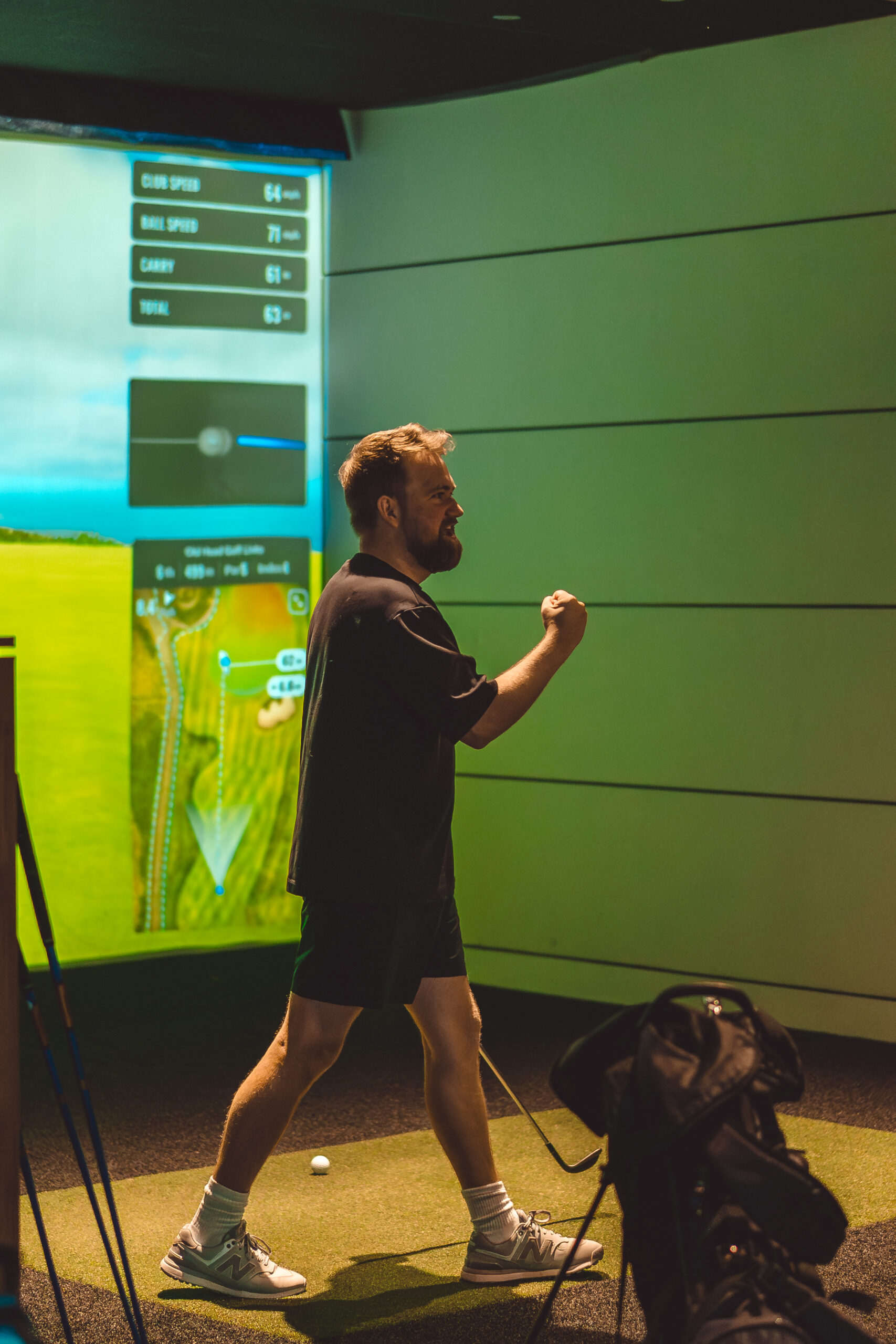
You can book a bay at a set time each week, know your session will run exactly 60-120 minutes, and walk out having played a “full round” without losing half a day.
For time-poor golfers, that predictability is what turns “I used to play” into “I play every week.”
What Indoor Golf Actually Is (And Isn’t)
Let’s clear something up.
Indoor golf is not:
• An arcade game
• A novelty simulator
• A replacement for outdoor golf
True indoor golf is:
• Structured
• Repeatable
• Measurable
• Community-driven
The technology matters, but the environment matters more.
When done properly, indoor golf becomes:
• A training ground
• A competition arena
• A social club
• A consistent pathway to improvement
It creates golfers who show up more often, and that’s where progress happens.
Instead of hoping the odd bucket of balls will translate into better scores, players follow structured sessions, repeat specific shots under the same conditions, and track their numbers over time.
Practice stops feeling random and starts feeling like a plan.
Why Improvement Accelerates Indoors

Every elite training environment shares three traits:
1. Consistency
2. Feedback
3. Deliberate practice
Indoor golf delivers all three.
• The same lies
• The same conditions
• Immediate data on every shot
• No weather excuses
Golfers stop guessing and start knowing.
This doesn’t replace outdoor play; it enhances it.
Indoor sharpens skills. Outdoor tests them.
That combination is where real improvement lives. It’s the same model elite athletes use in other sports: controlled reps in a performance environment, followed by game-day execution in the real world.
The Social Shift: Golf as a Community Sport Again
Something else happens indoors that outdoor golf lost over time: frequency of connection.
When golf becomes:
• Weeknight friendly
• Short-format compatible
• Flexible and social
It stops being an “event” and starts becoming a habit.
Leagues thrive.
Friendly rivalries form.
People improve together.
This is why indoor golf clubs aren’t just venues, they’re communities.
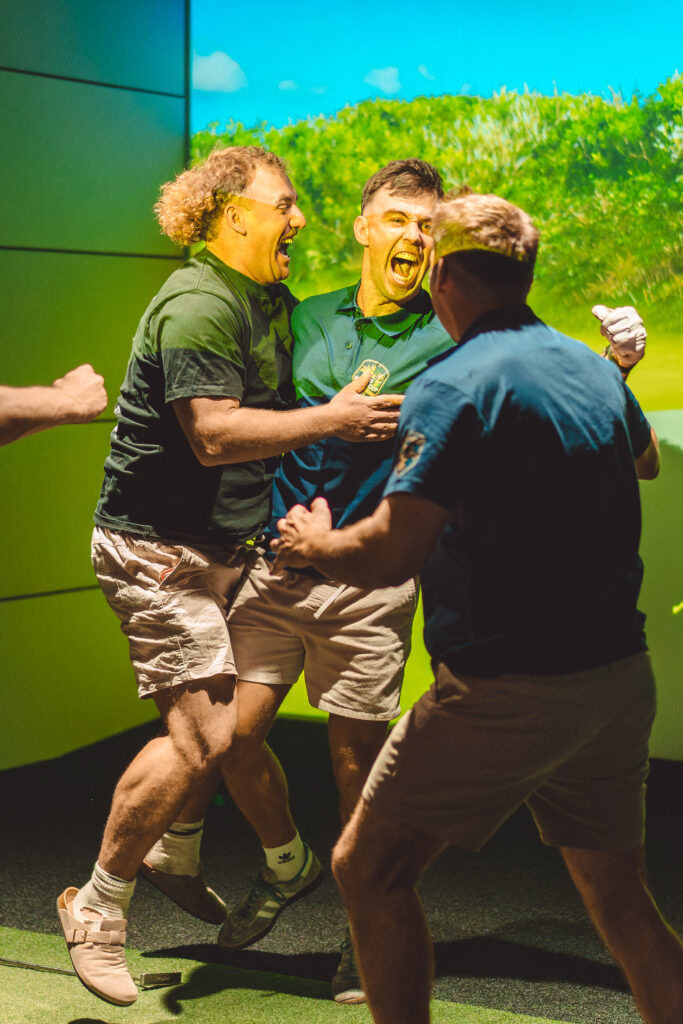
And community is the strongest retention engine any sport has. When you know your league group is waiting, or your name is on a season-long leaderboard, it’s easier to show up, stay accountable, and keep investing in your game.
Golf becomes something you build into your weekly rhythm, not just something you plan for special occasions.
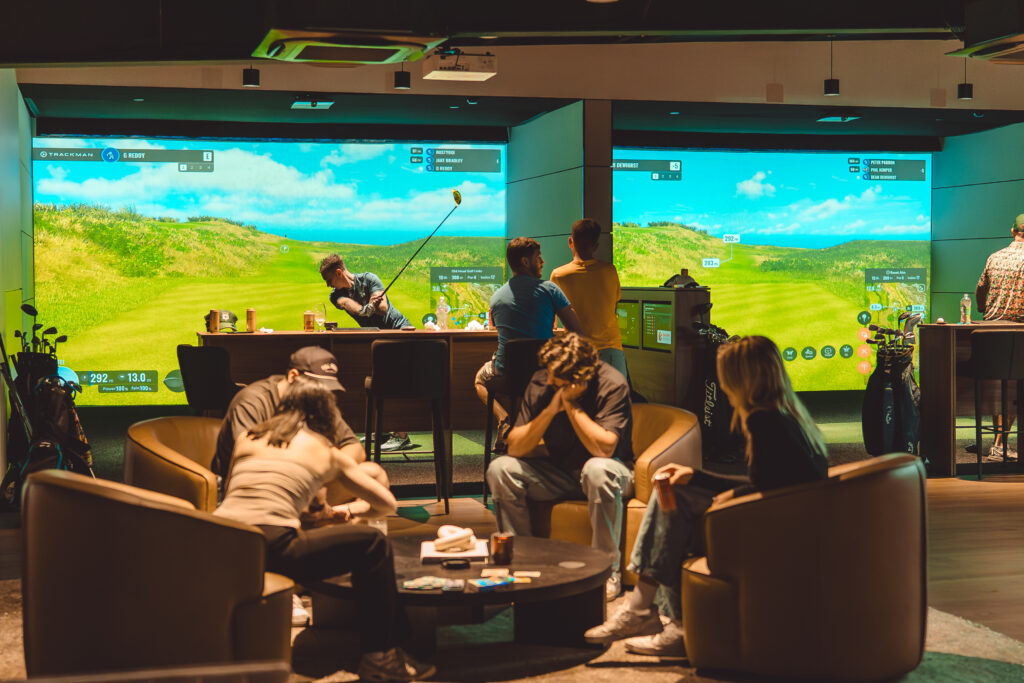
Indoor Golf Doesn’t Compete With Courses, It Complements Them
This part matters.
Indoor golf isn’t here to replace traditional clubs.
It:
• Feeds confidence into outdoor rounds
• Builds new golfers who later join courses
• Keeps people playing when life gets busy
• Extends the golf ecosystem rather than shrinking it
The healthiest sports always have multiple entry points.
Indoor golf is one of them. A player might start with a casual indoor session, progress to a regular league, then feel ready to book more outdoor tee times or even join a club.
Instead of competing for the same tee slots, indoor venues and courses share golfers across seasons, life stages, and skill levels.
Where GolfSpace Fits
GolfSpace was built on a simple belief: Golf improves faster when it fits into real life.
That’s why we focus on:
• Structured improvement
• Competitive play
• Social connection
• Premium environments that people want to belong to
We don’t see indoor golf as a trend.
We see it as a permanent layer of the modern game.
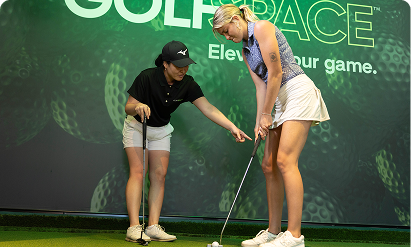
At GolfSpace, that means pairing best-in-class technology with coaching, formats, and spaces designed so you can train with intent, whether you’re new to golf, juggling a busy career, or chasing single figures.
You’re not just booking a simulator; you’re stepping into a clear pathway to play more, improve faster, and connect with people who love the game the way you do.
The Future Is Hybrid
The future of golf isn’t indoor or outdoor. It’s both.
Indoor for:
• Training
• Competition
• Community
• Consistency
Outdoor for:
• Challenge
• Tradition
• Course management
• The full expression of the game
Together, they create better golfers, and a stronger sport.
That’s the future we’re building toward.
The game becomes more accessible and sustainable for modern life, without losing the heritage that made it great.
Explore Modern Golf
If you want to explore how modern indoor golf works in practice, from improvement to leagues to events, BOOK TODAY. Start with one session and experience how easy it is to fit real, meaningful golf back into your week.
FAQs About Indoor Golf at GolfSpace
Q. Do I need to be a good golfer to use GolfSpace?
You do not need to be a good golfer to use GolfSpace; the venue is designed for beginners, returning players, and experienced golfers, with coaching, practice modes, and games that scale to your skill level.
Q. Is GolfSpace membership required to play?
You do not need a membership to play at GolfSpace; you can book casual sessions, then choose a membership later if you want regular access, member pricing, leagues, and added inclusions.
Q. How long does an indoor round take at GolfSpace?
An indoor round at GolfSpace typically takes about one hour, letting you play 18 holes on famous courses in a fraction of the time it would take outdoors.
Q. What technology does GolfSpace use?
GolfSpace uses TrackMan simulators, a TrackMan-powered range, advanced putting tools like PuttView, and a dedicated wedge calibration area to deliver precise data for every part of your game.
Q. Can I join leagues or events at GolfSpace?
Yes, GolfSpace runs leagues, comps, and member events so you can play regularly, track your progress, and compete socially or more seriously with other golfers.
- What Is Virtual Golf and How Does It Work?
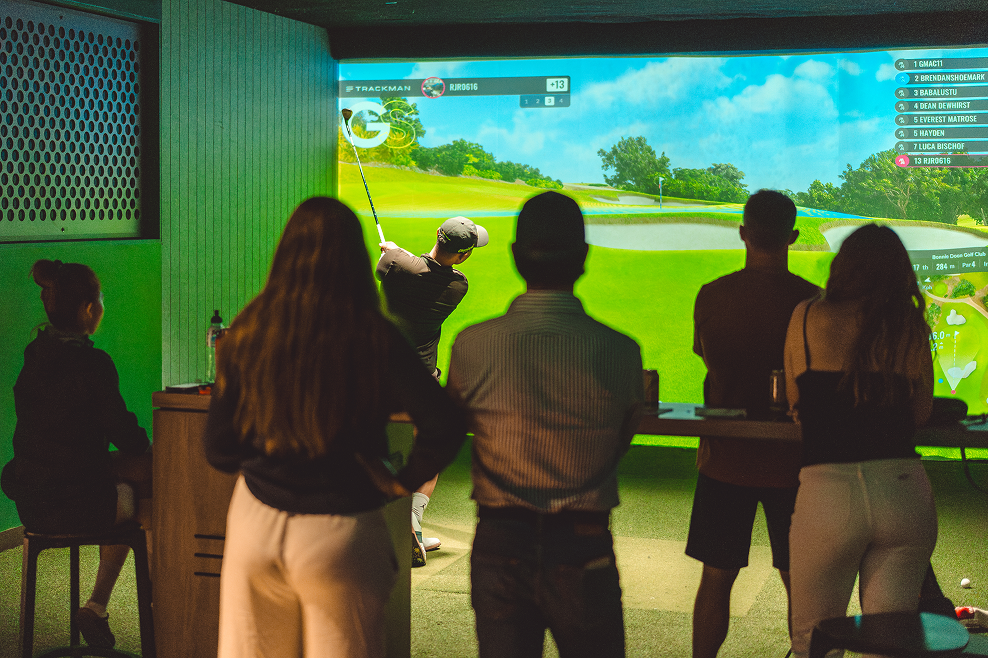 At GolfSpace, virtual golf means playing real golf indoors on TrackMan simulators that capture detailed club and ball data while projecting lifelike courses and practice modes onto a floor‑to‑ceiling impact screen.
 - Why Indoor Golf Is the Fastest-Growing Form of the Game, And Why It Belongs in Golf’s Future
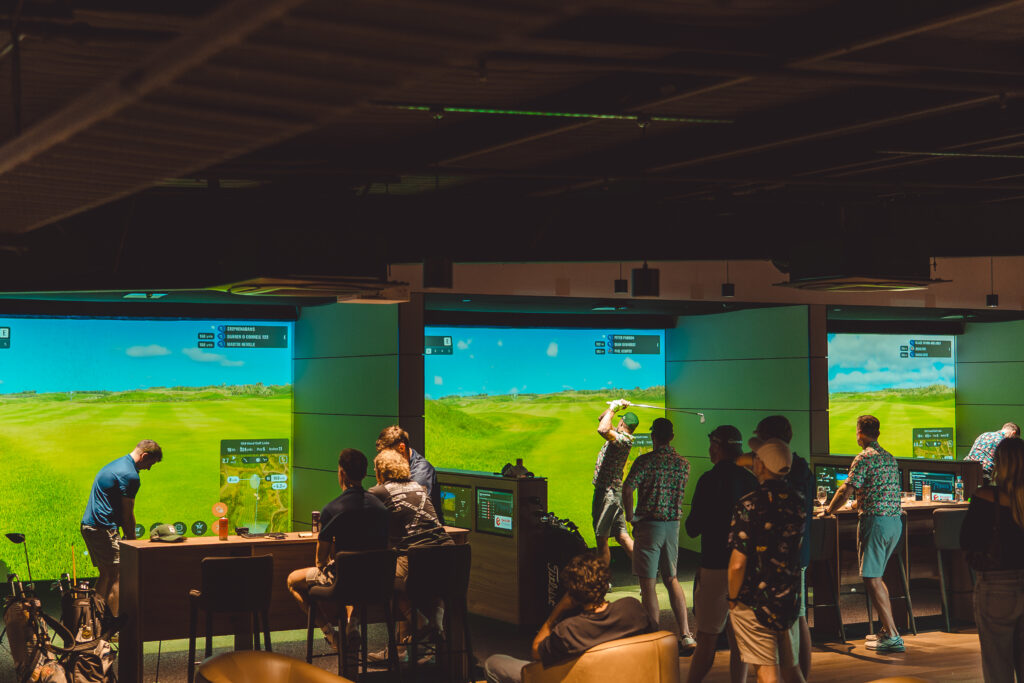 From suburban professionals squeezing in nine holes after work to city dwellers who don’t live near a course, indoor golf is quietly becoming the format that keeps people actually playing, not just wishing they had more time.
 - Why One Golf Lesson Doesn’t “Fix” Your Swing (And What Actually Works)
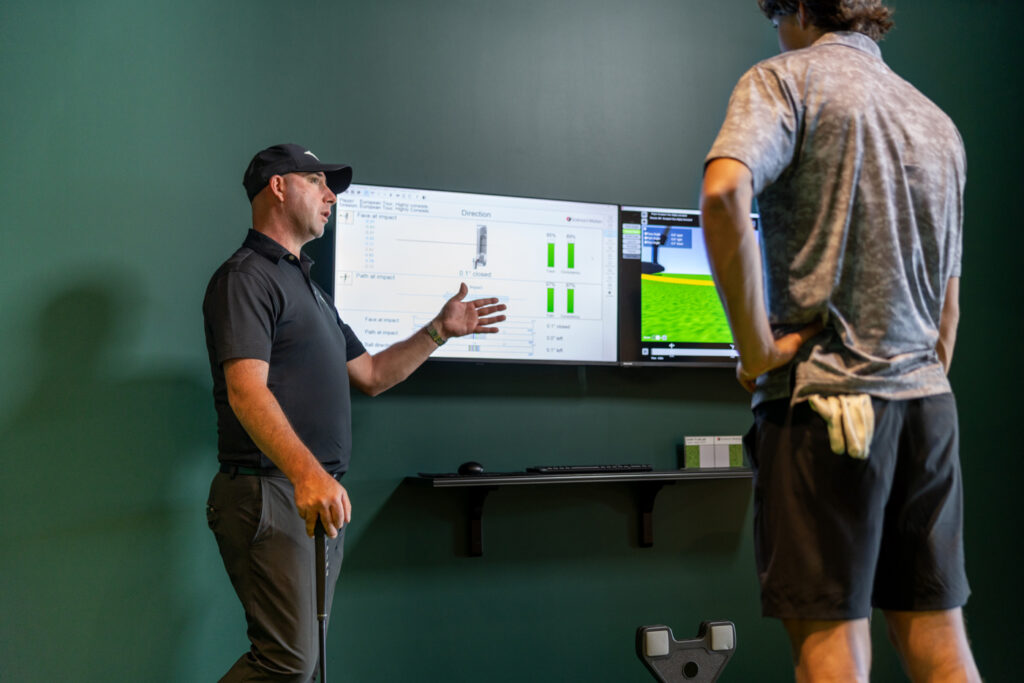 Golf is one of the most technically demanding, mentally complex, and time-intensive sports on the planet. That’s not an opinion; the numbers prove it.
 - Why the Golf Trip is the Peak of the Game
 The Dream Team Series is GolfSpace’s flagship team-based indoor golf competition. A season-long tournament designed to replicate the drama, strategy, and pressure of real competitive golf, inside a TrackMan-powered arena.
 - The Night that Defined what Dream Team is all About
 The Dream Team Series is GolfSpace’s flagship team-based indoor golf competition. A season-long tournament designed to replicate the drama, strategy, and pressure of real competitive golf, inside a TrackMan-powered arena.